Kumano Sanzan in Wakayama: Complete Guide to Japan’s Three Sacred Shrines
May 12, 2026/
Table of Contents
What is Kumano Sanzan?
Kumano Sanzan (熊野三山) refers to three sacred Shinto shrines; Kumano Hongu Taisha (熊野本宮大社), Kumano Nachi Taisha (熊野那智), and Kumano Hayatama Taisha (熊野速玉大社) that are located in the mountainous Kii Peninsula in Wakayama Prefecture (和歌山県). These shrines are part of the UNESCO-listed Kumano Kodo pilgrimage routes and are considered one of Japan’s most important spiritual destinations.
Kumano Sanzan is one of Japan’s most sacred pilgrimage destinations, yet it still feels untouched and deeply spiritual compared to places like Kyoto. When my wife and I explored this region, we were blown away by how each shrine — hidden among mountains, waterfalls, and ancient forests; offers a completely different experience.
From the dramatic backdrop of Nachi Falls to the peaceful forest paths leading to Hongu Taisha, visiting the Kumano Sanzan shrines is not just sightseeing; it’s a journey into Japan’s spiritual heart. If you’re planning a trip to Wakayama or considering driving through the region, this guide will help you experience all three shrines efficiently (and meaningfully).
Disclaimer: This article contains affiliate links. If you book after clicking on one of these links then I may receive a small commission at no extra cost to you.
The Three Kumano Sanzan Shrines Explained
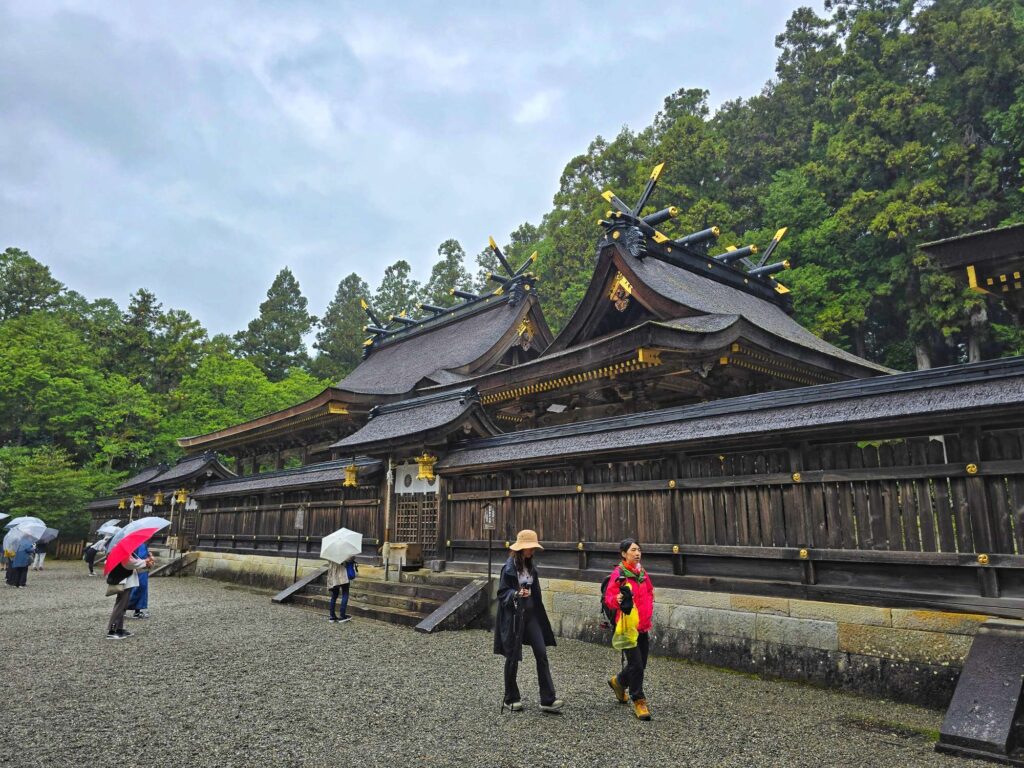
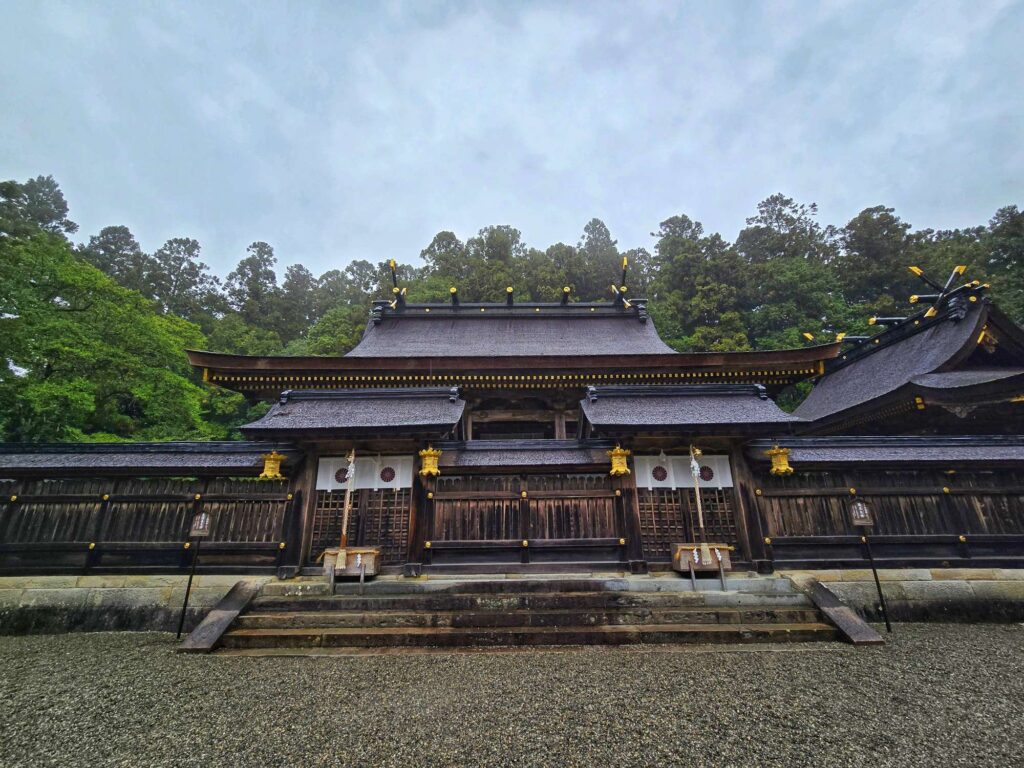
Kumano Hongu Taisha (熊野本宮大社)
Kumano Hongu Taisha is the head shrine of not just Kumano Nachi Taisha and Kumano Hayatama Taisha, but also for the other 3,000 Kumano shrines across Japan. This also makes it the spiritual center of the ancient Kumano Kodo (熊野古道) pilgrimage route.
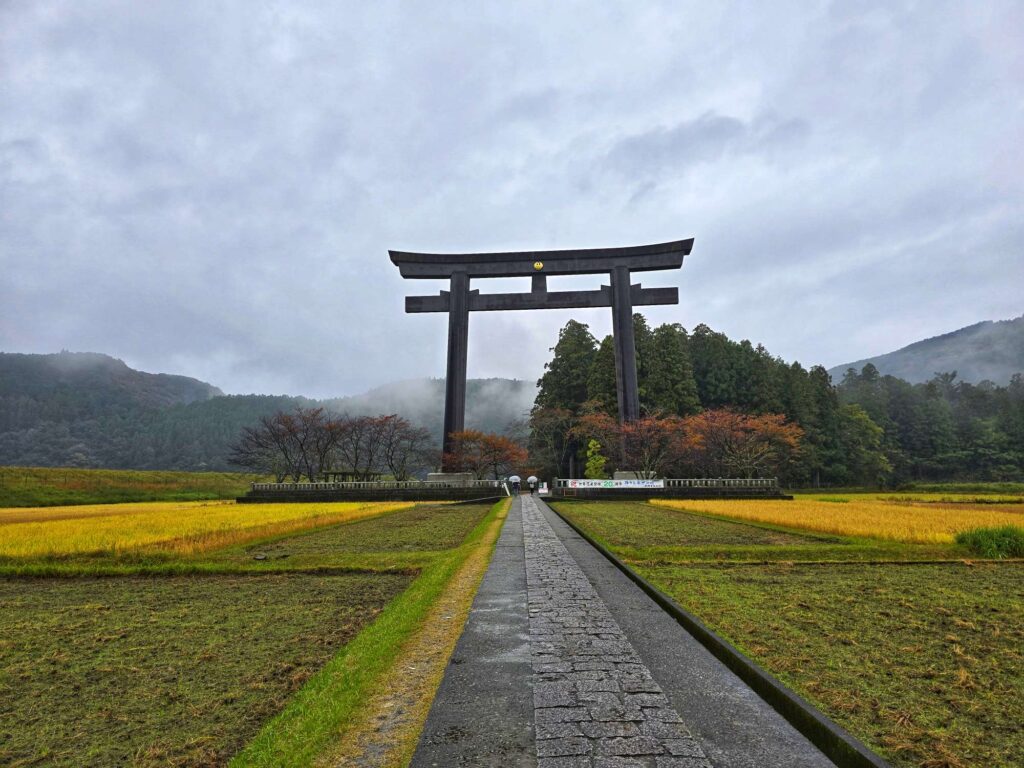
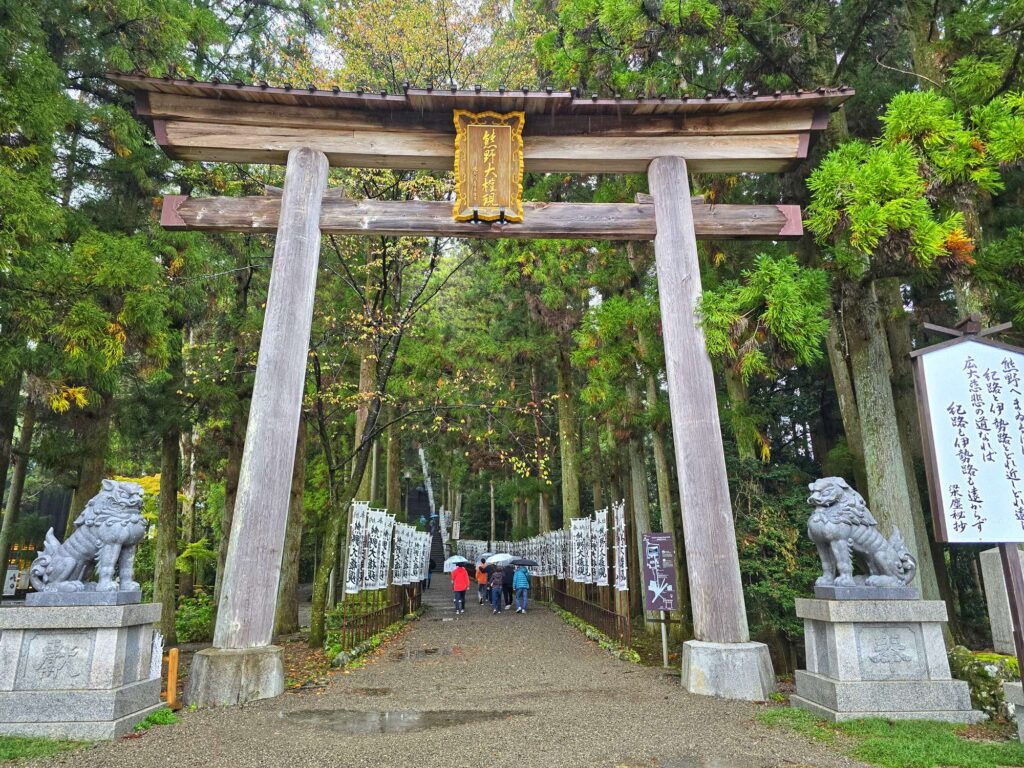
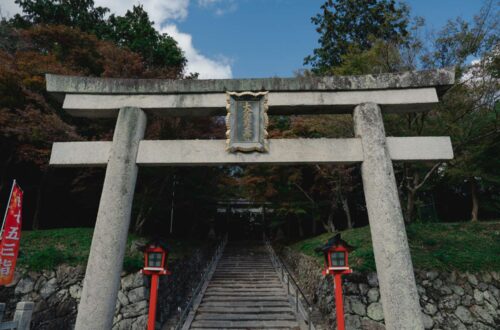
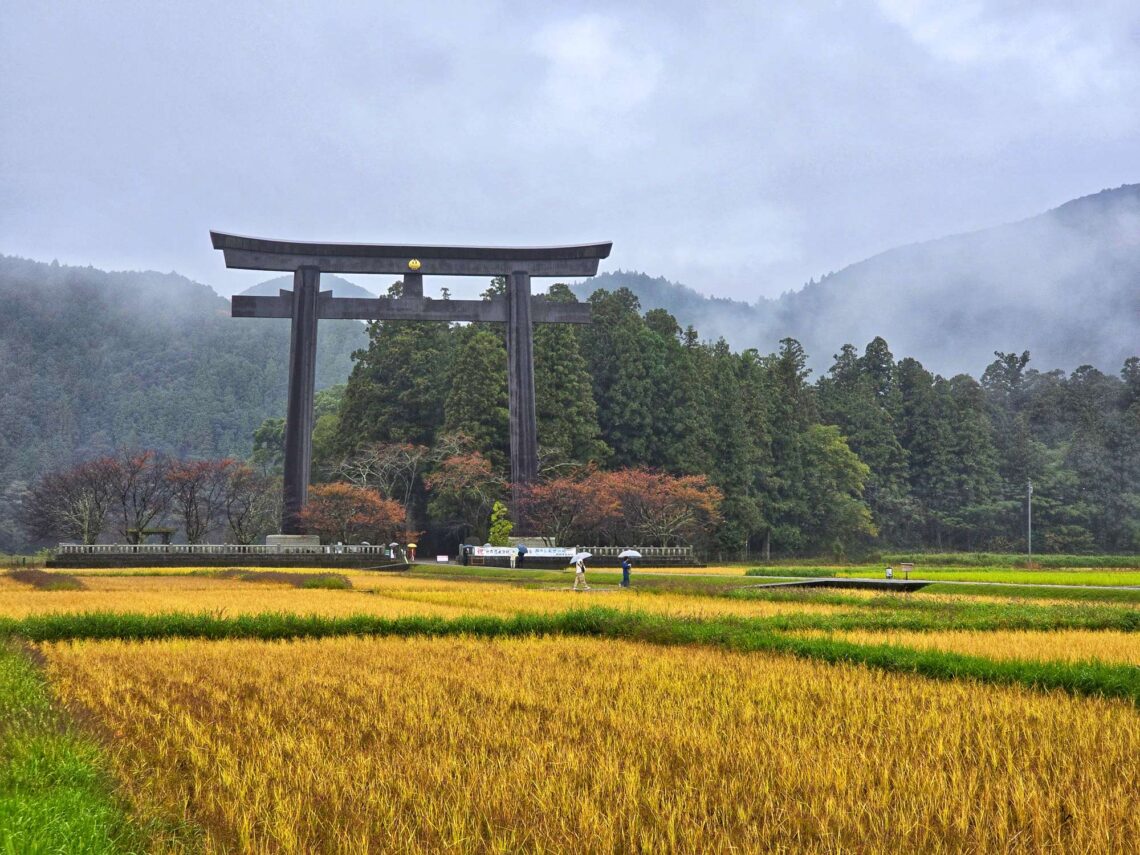
The main highlight of this shrine is the Oyunohara (大斎原), the largest Torii gate (鳥居) in the world at 33 metres tall. And the gate is meant to represent the former site of the shrine before it is moved to its current location due to frequent flooding.
As it is located on a hill within a forest, the shrine offers a peaceful and forested atmosphere that is really ideal for those who love immersing themselves in mother nature.
Kumano Nachi Taisha (熊野那智大社)
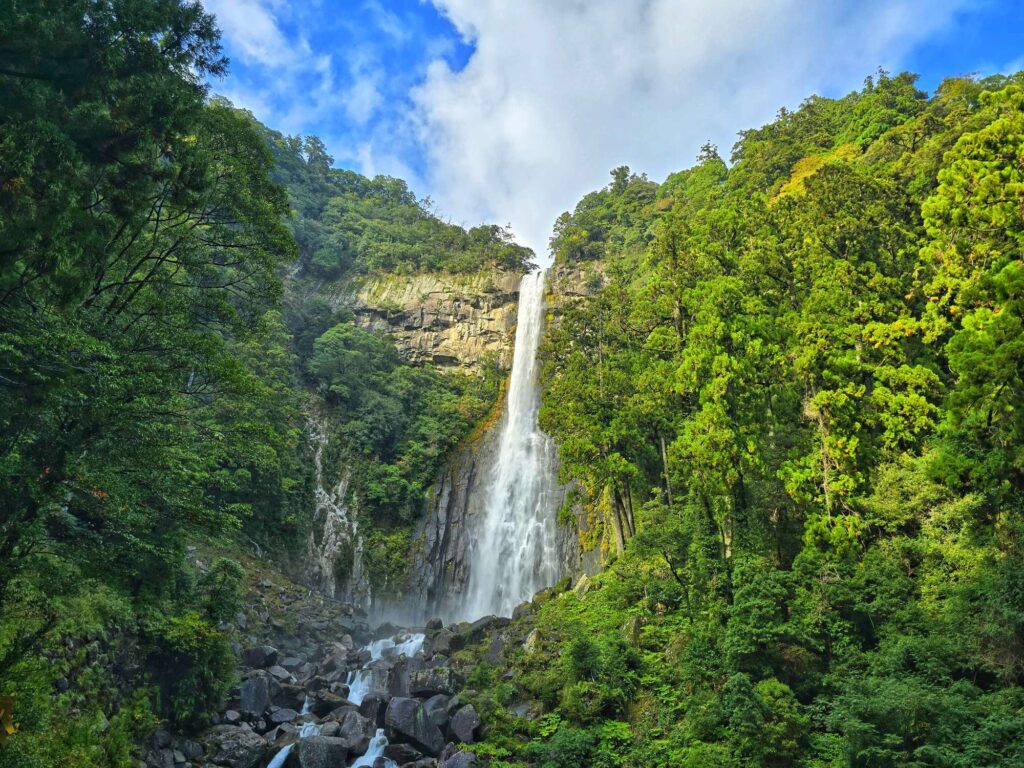
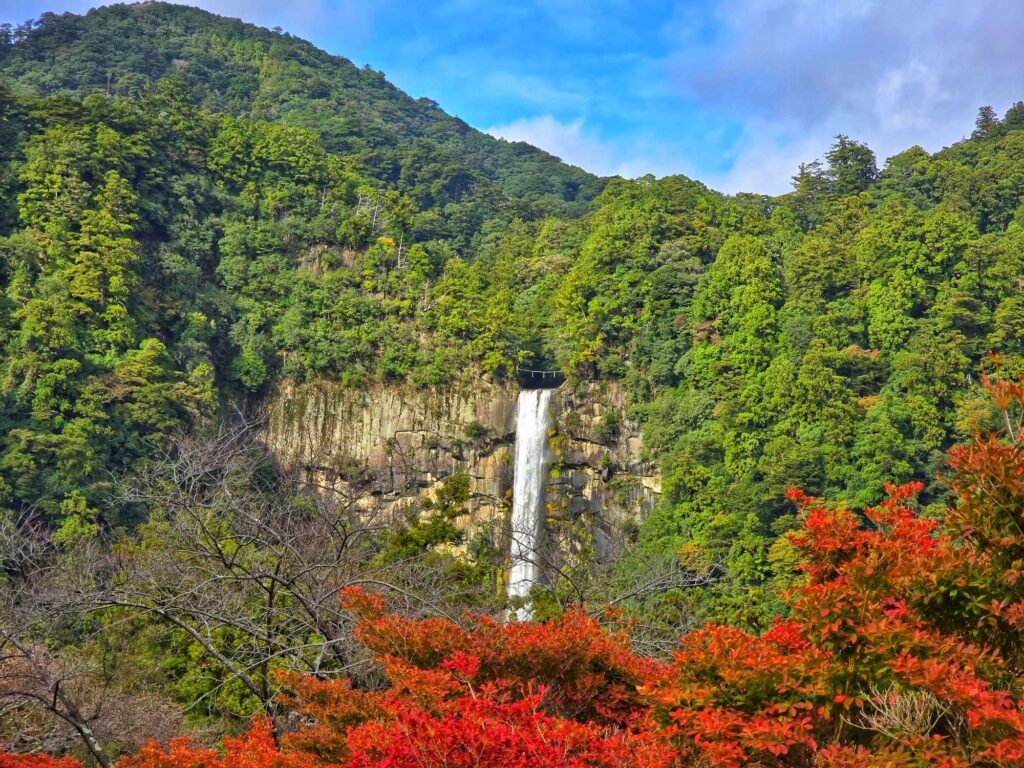
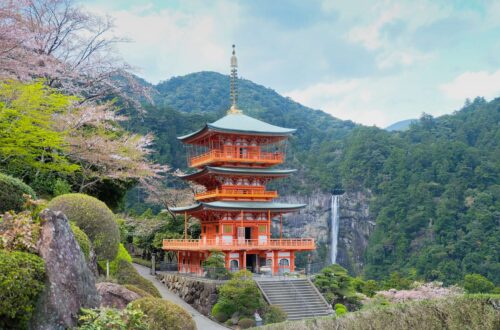
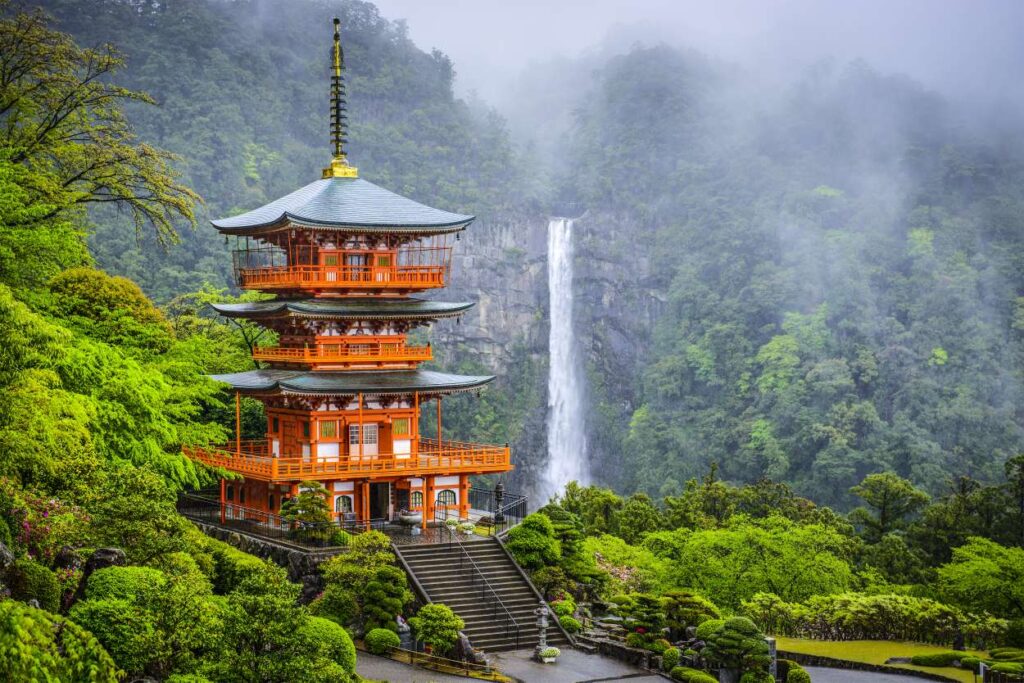
If there is a shrine that defines the term photogenic, it will be Kumano Nachi Taisha. This shrine is the poster boy of Kumano Sanzan and is often featured in many tourism promos and ads. And for a good reason, as it features the famous Nachi Falls, one of the most majestic and scenic waterfalls in Japan.
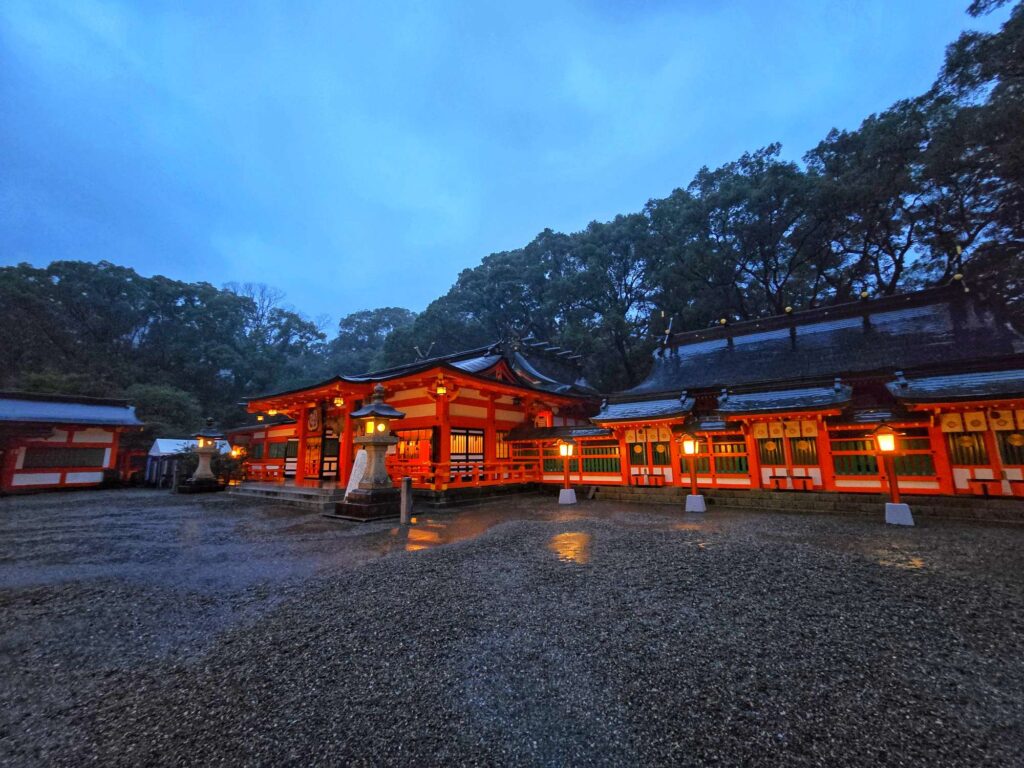
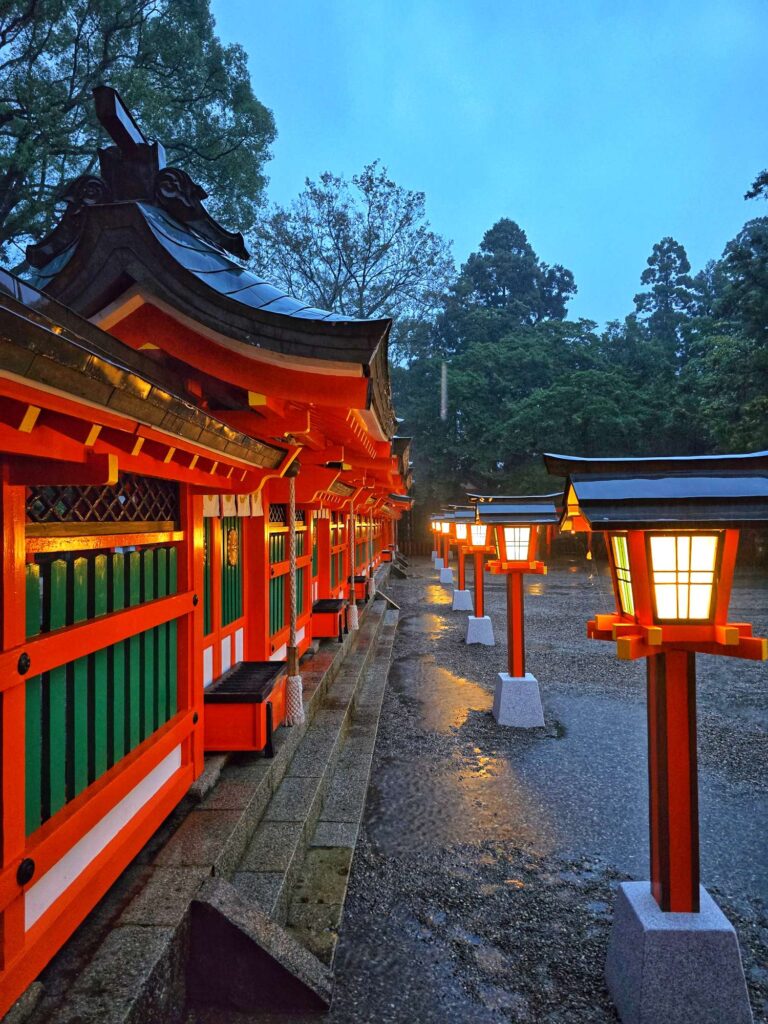
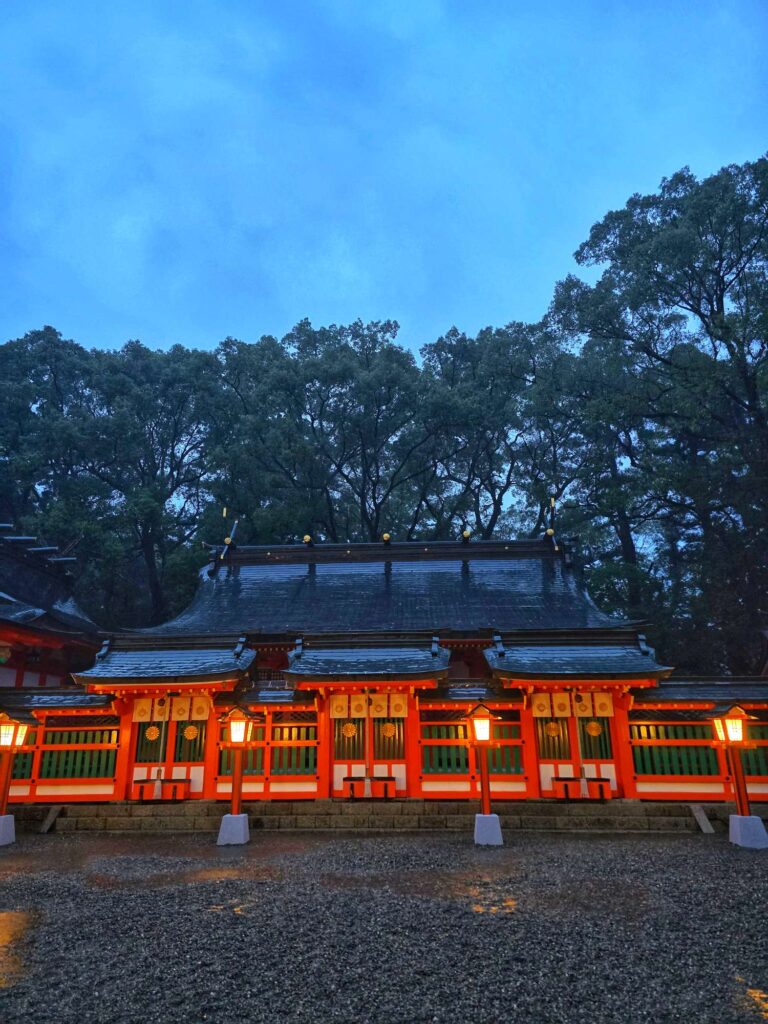
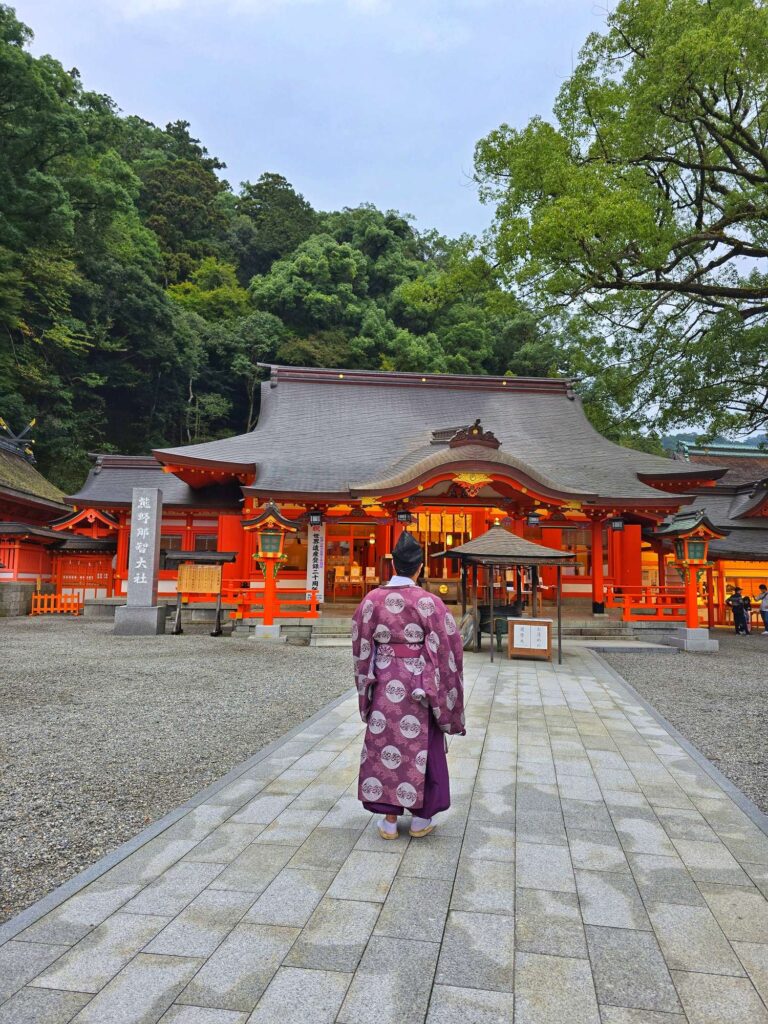
The third member of the triumvirate and easily the most accessible. Hayatama Taisha is located in the city of Shingu, just at the edge of the city along the riverbanks. The charm of the shrine lies in its vermillion structures that assimilates wonderfully with the surrounding lush trees.
Unlike the other 2 shrines, Hayatama Taisha’s attractions are more subtle rather than majestic. Example includes a 1,000 years old Nagi tree that is said to bring luck to married couples. For those who are into hiking, it is worth paying a visit to the nearby Kamikura Shrine (神倉神社). While the hike can be challenging due to the steep steps, those reaching the top will be rewarded with a breathtaking panoramic view of Shingu city.
Here’s a summary of what to look out for each shrine:
Shrine
Highlight
Best For
Kumano Hongu Taisha
Giant torii gate (Oyunohara)
Spiritual atmosphere
Kumano Nachi Taisha
Nachi Falls
Iconic photos
Kumano Hayatama Taisha
Riverside setting
Easy access
How to Visit Kumano Sanzan (Route, Transport & Access)
Quick Answer
The best way to visit Kumano Sanzan Wakayama is by car, as the three shrines are spread across a large mountainous area. Driving allows you to visit all three in one day (one and a half if you prefer a more relaxing pace), while public transport usually requires two days.
Kumano Sanzan Map & Route Overview 📍
Kumano Sanzan is located across the Kii Peninsula (紀伊半島) in Wakayama, with each shrine positioned in a different area:
Kumano Hongu Taisha – inland, mountainous region
Kumano Nachi Taisha – nearby the coastal town of Nachi-Katsuura (那智勝浦)
Kumano Hayatama Taisha – inside the coastal city of Shingu (新宮)
Here’s the most efficient route to explore all 3 would be with a map below showing what the route looks like: 👉 Nachi Taisha (1) → Hayatama Taisha (2) → Hongu Taisha (3)
(This route serves to minimise backtracking and works best if you’re driving. It also assumes you start from Nachi-Katsuura (那智勝浦); where most people will get off by train to visit Nachi Taisha.)
Driving from Nachi Taisha to Hayatama Taisha is relatively simple due to the highway and it takes around 30 – 45 minutes. From Hayatama Taisha to Hongu Taisha however, the drive will take around an hour plus as you will be driving along mountain roads.
Driving also offers much more flexibility in planning out your own timing and schedule; i.e. visit Nachi Taisha first and then the other two shrines in the following day.
One can also easily stop by the onsen towns nearby Hongu Taisha, such as Yunomine Onsen (湯の峰温泉); famed for the Tsuboyu (つぼ湯) which is the oldest hot spring in Japan and a world heritage site.
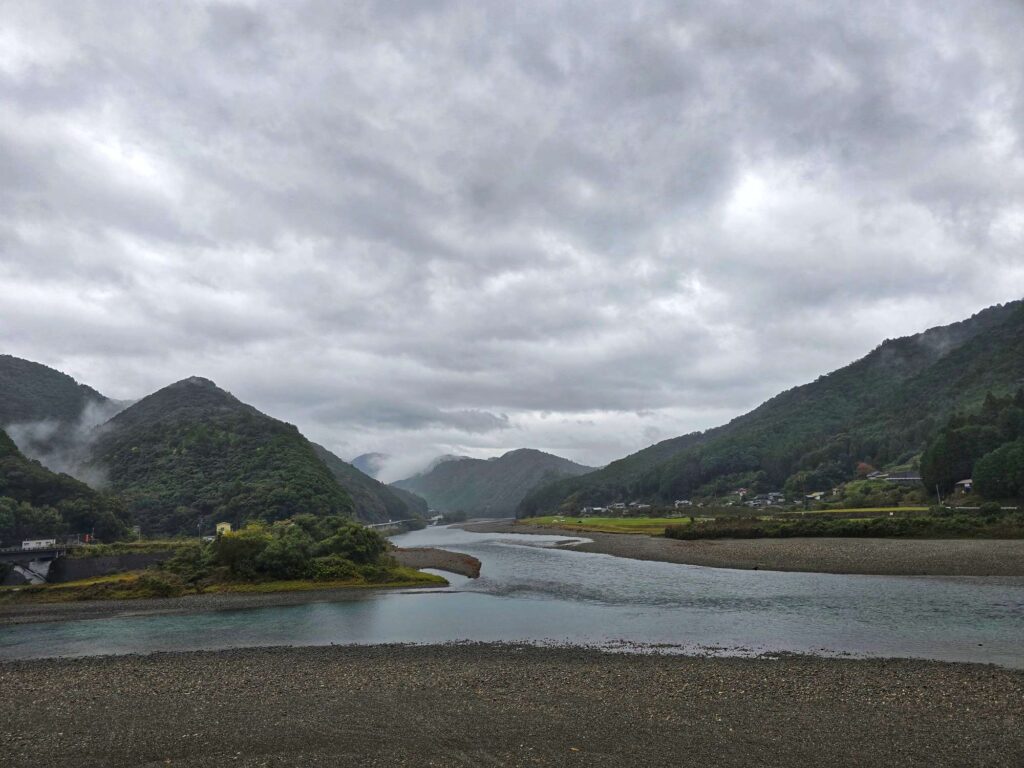
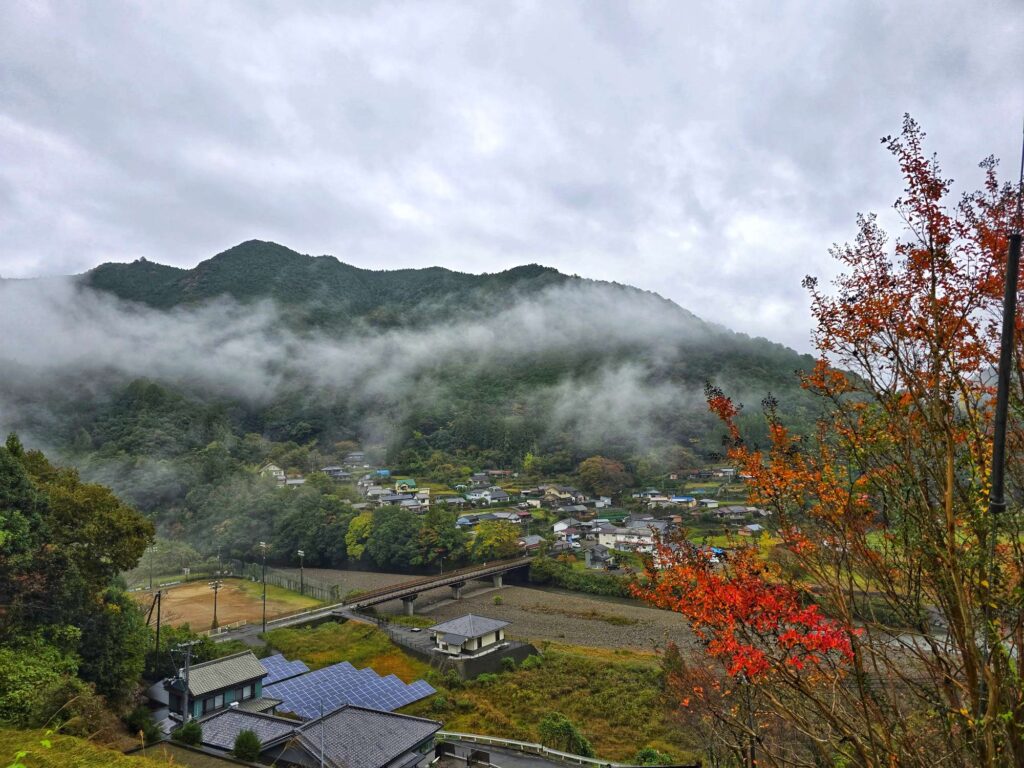
Our view on the way to Kumano Hongu Taisha. These majestic mountains are not to be missed; and the rain and mist add a mystical feel to the overall scenery.
Public Transport (Points to Consider):
Travelling to all three shrines require multiple buses and train transfers; given that there is no single direct service that connects all three destinations. Not to mention, these buses and trains run on limited schedules.
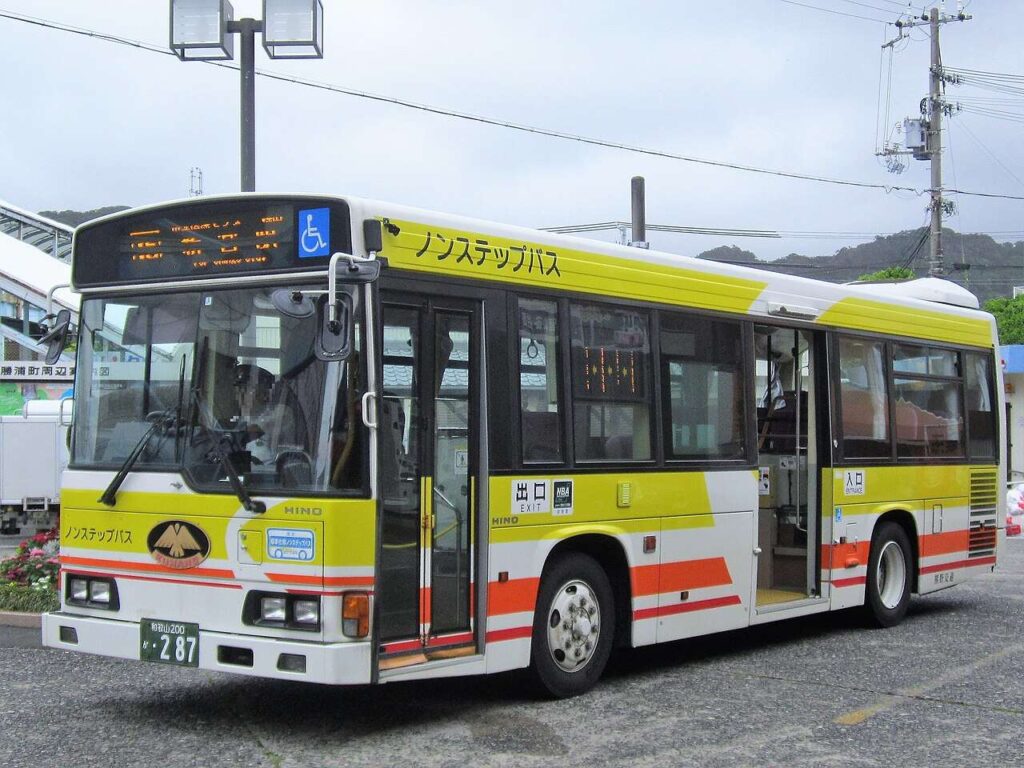
For example, the local bus that connects Nachi-Katsuura town (那智勝浦) to Nachi Taisha (那智大社) runs only once every hour and the journey takes around 30 minutes with multiple stops. To get to Shingu (新宮) for Hayatama Taisha (本宮大社) and Hongu Taisha (本宮大社), you will need to catch another separate bus line from Nachi-Katsuura town.
Public transportation is definitely more suitable for those who are on budget, visiting only one of the shrines or if you have more travel days to spare. Be sure to check out the local bus website HERE to get an idea of what their schedules are like.
From our experience, driving made the journey significantly smoother especially when navigating between the shrines. If you’re planning a similar trip, renting a car (e.g. Tocoo) gives you much more flexibility in Wakayama.
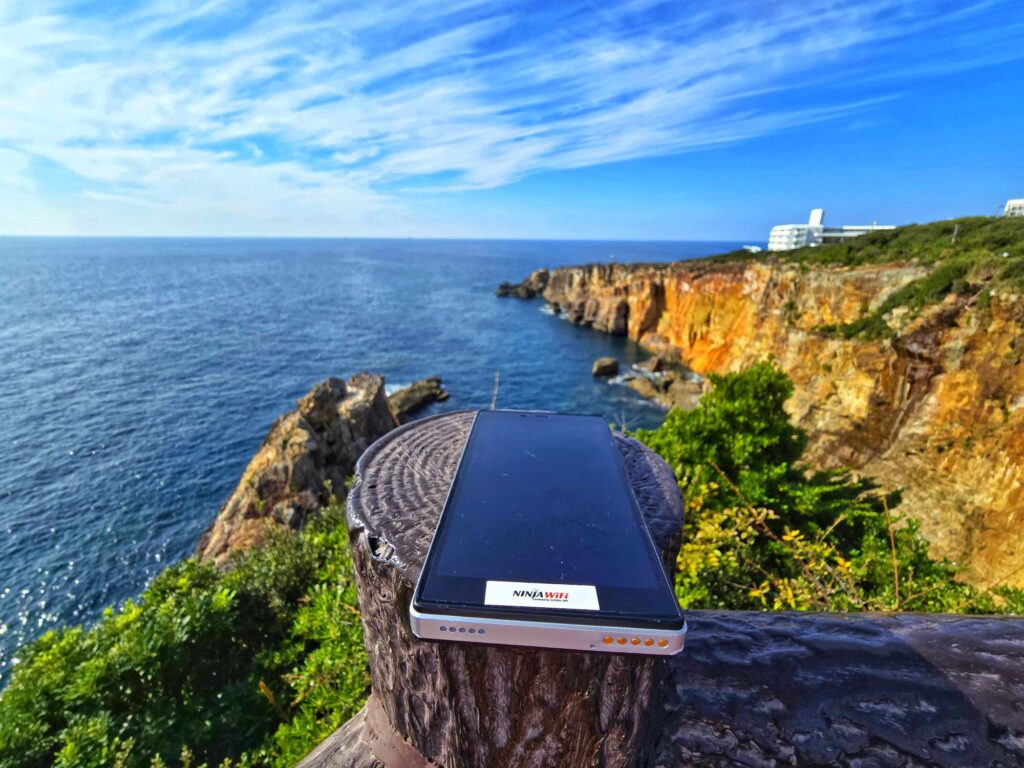
Because the Kumano Sanzan shrines are located in a rural, mountainous area, mobile signal can be inconsistent in certain spots; especially when driving between the shrines.
During our trip, having a portable WiFi made our navigation much easier, especially when using Google Maps in remote areas.
🚆 How to Get to Kumano Sanzan (From Osaka, Kyoto & Nagoya)
The Kumano Sanzan shrines can be accessed easily from the major cities of Osaka (大阪), Kyoto (京都) and Nagoya (名古屋).
From Osaka by train:
Catch the limited express train Kuroshio (くろしお) from Shin-Osaka station (新大阪駅). This limited express train serves to transport passengers across the cities in Wakayama Prefecture up until the town of Shingu (新宮).
Then, disembark at Kii-Katsuura Station (紀伊勝浦駅); which you can start your journey from here. The entire journey from Shin-Osaka takes about 4 hours. Do note that NOT ALL Kuroshio trains commute all the way until Shingu; hence it is advisable to check the schedule via Jorudan first prior to boarding the train.
The JR Kuroshio train
From Kyoto by train:
The same method above from Osaka also applies to Kyoto, except that you will have to first catch the Tokaido-Sanyo (東海道山陽) Special Rapid Himeji train from Kyoto Station (京都駅) to Shin-Osaka station (新大阪駅). The journey itself takes an additional 30 minutes.
If you are travelling from Osaka and Kyoto, then the Kansai Wide Area Pass is a great cost-saving option to consider as it covers the Special Rapid and Kuroshio train rides.
From Nagoya Station (名古屋駅), catch the limited express train Nanki (南紀) and then, disembark at Kii-Katsuura Station (紀伊勝浦駅); which you can start your journey from here. Similarly to Osaka, the entire journey takes around 4 hours as well.
In this case, the Ise-Kumano-Wakayama Tourist Pass is the go-to pass as it covers the Nanki line. Another plus point is that this pass covers the bus fare from the station to Nachi Taisha as well; meaning you don’t need to purchase the Nachi Area World Heritage Free Pass Ticket (那智エリア世界遺産フリー乗車券).
Another option for those who prefer flexibility and enjoy the scenery along the way is renting a car. The Kumano Sanzan shrines can be reached by car from either Osaka or Nagoya and it takes around 3 – 4 hours of drive.
This is the method my wife and I used to explore the coastal area of Wakayama prefecture as well as towns and cities such as Wakayama (和歌山), Shirahama (白浜) and also Nachi-Katsuura (那智勝浦).
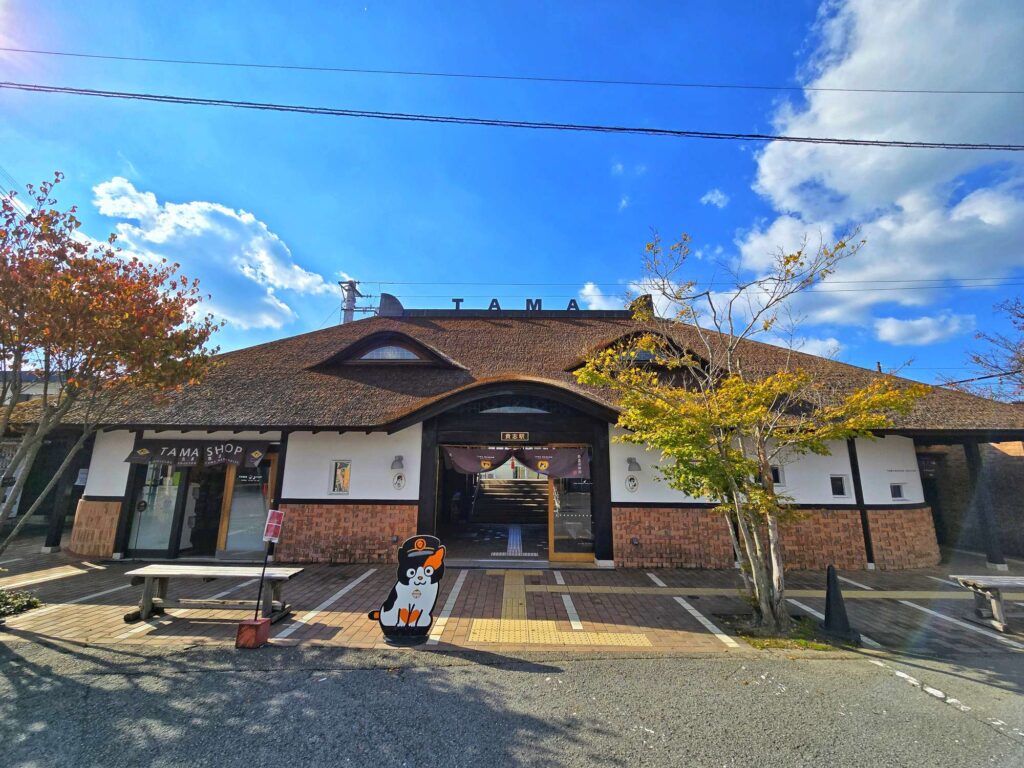
We also visited the Tama Densha rail; home to the first feline stationmaster in Japan. Click on the picture for our travel guide to this cute train experience.
RENTING a car allows us to to enjoy not just the mesmerising ocean view of the coastal road but also the majestic mountains of the countryside; an experience certainly not to be missed especially if you are driving around Wakayama Prefecture. Keen in renting a car for your next Japan road trip? Check out Tocoo for more info here.
Visiting the three Kumano Sanzan shrines is like a spiritual journey itself. As my wife and I drove across the region to each shrines, we passed by a variety of unique landscapes such as coastal landscapes, small villages and majestic mountains; making us feel as if we were on a pilgrimage.
Both of us then head up north the next day to visit Kumano Hongu Taisha; the personal highlights being the surrounding majestic mountain landscapes and the Torii gate which is the largest in Japan. If Nachi Taisha exudes a sense of grandeur with its beautiful sceneries, Hongu Taisha exudes more of a sense of spirituality with its tranquil surroundings.
And lastly, we dropped by Kumano Hayatama Taisha which is located within the city of Shingu. Being located next to the river and forest, Hayatama Taisha offers a more relaxing and tranquil shrine experience compared to the other two shrines.
Best Time to Visit Kumano Sanzan
Much like many places in Japan, spring (see below Instagram post from Nachi Taisha’s official Instagram) and autumn are two of the best seasons to explore the Kumano Sanzan shrines, not just for their pleasant temperatures for hiking but also for the cherry blossom and fall foliage views respectively.
If possible, avoid summer as it is hot and humid during this time. However, this is also the time to visit Nachi Taisha if you want to visit the Nachi Fire Festival (Nachi-no-Ogi matsuri or 那智の扇祭り) which happens on July 14th every year.
Winter offers lower crowds but colder temperatures. Hongu Taisha in particular offers a stunningly beautiful winter scenery (see Hongu Taisha’s official Instagram post below). Take note however that sunset occurs earlier around 4.30 to 5.00pm and sites will close earlier than usual.
⏰ Start Early to Avoid Rushing – If you’re planning to visit all three shrines in one day, start as early as possible. Travel times between locations are longer than they look on the map, and arriving early helps you enjoy each shrine without feeling rushed. If waking up early isn’t your thing, consider during a two-day trip instead.
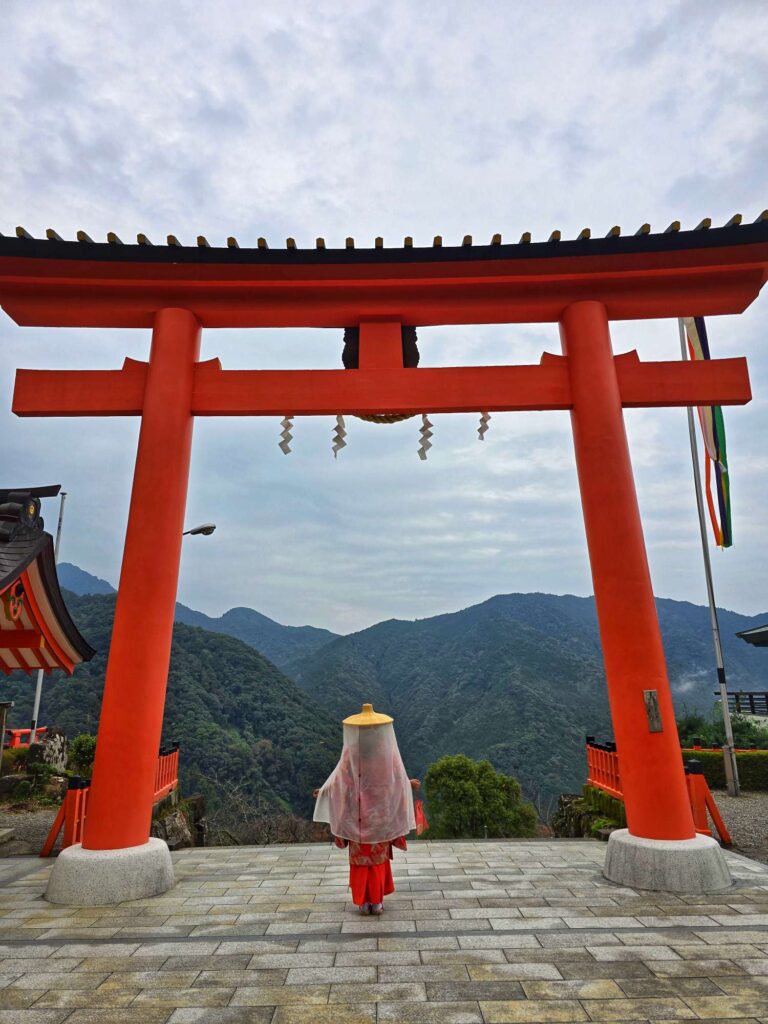
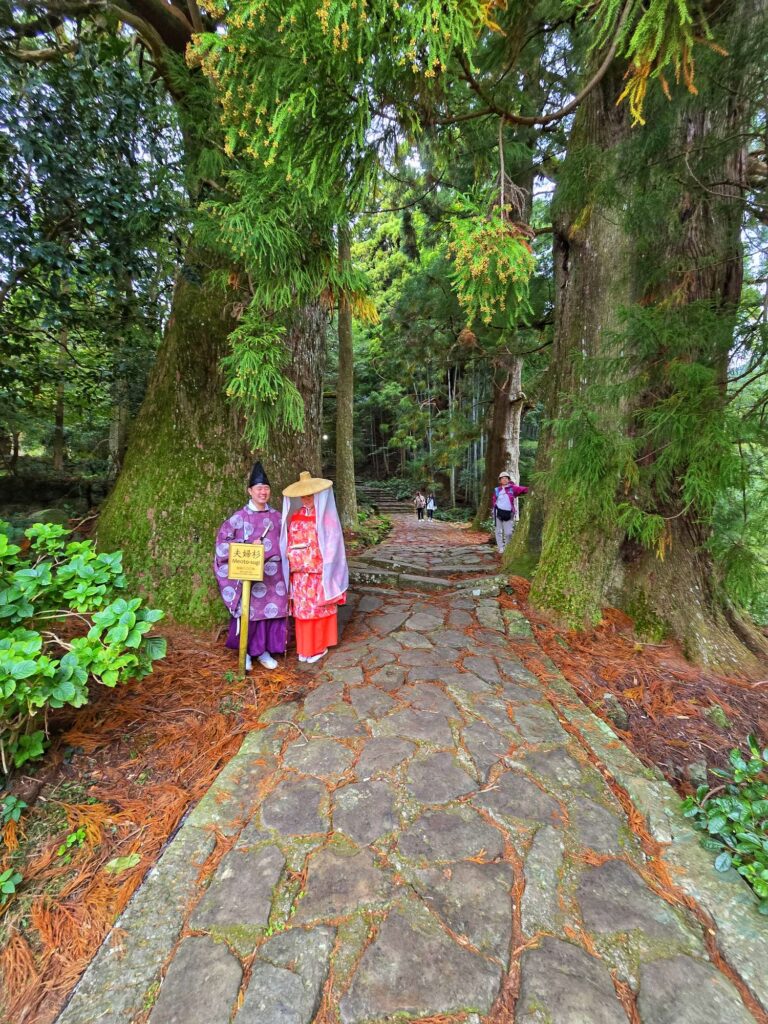
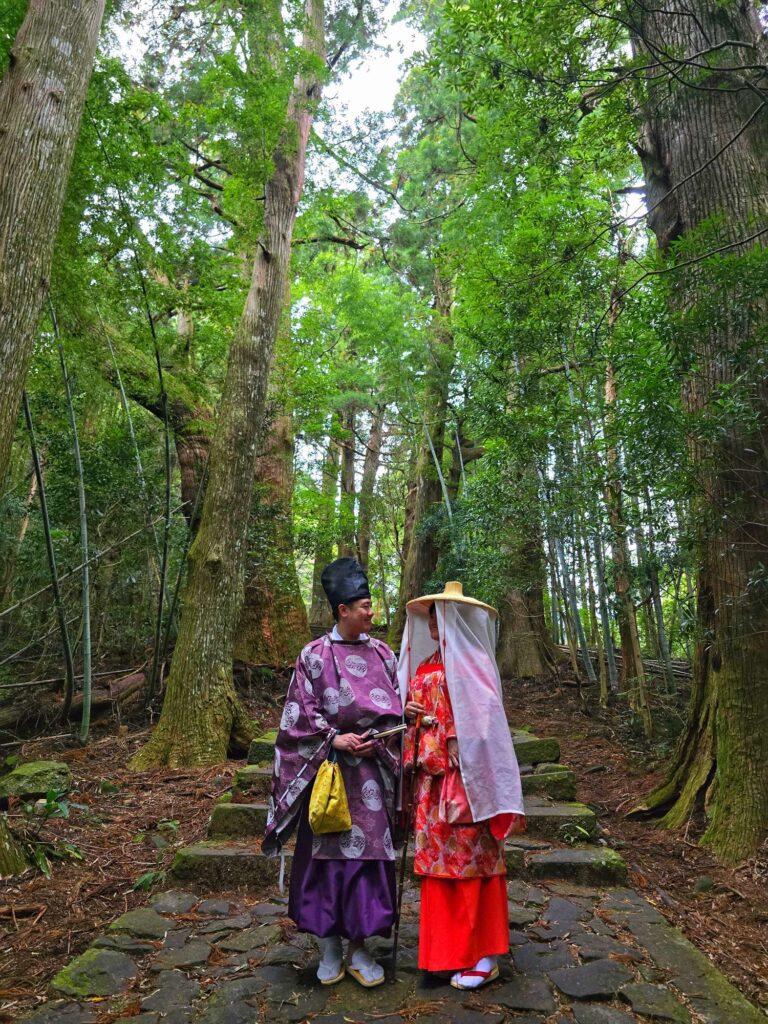
👟 Wear Comfortable Shoes – You’ll be doing quite a bit of walking and hiking; especially at Kumano Nachi Taisha and the Daimonzaka Slope. (see below pic for our Heian period costume experience). Comfortable shoes make a big difference.
🚗 Don’t Underestimate Travel Time – Driving through Wakayama is scenic, but roads can be winding and slower than expected, especially the stretch leading to Hongu Taisha. What looks like a short distance on Google Maps can easily take longer in reality. This also applies if you are taking public transportation.
📶 Download Maps or Use Reliable WiFi – Signal can be patchy in mountainous areas. We relied heavily on navigation during our drive, so having offline maps or portable WiFi is extremely helpful.
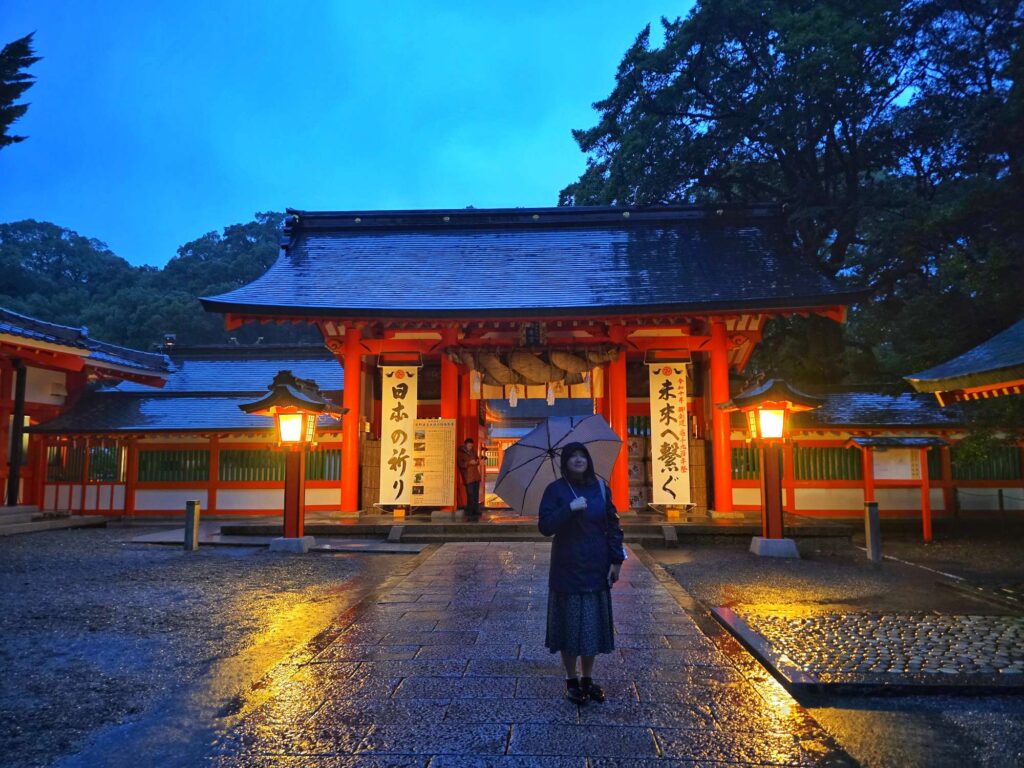
🌧️ Don’t Worry About Light Rain – Rain actually adds to the atmosphere; mist over the mountains makes the experience feel even more mystical. We had light rain during our visit, and it made the shrines feel even more special.
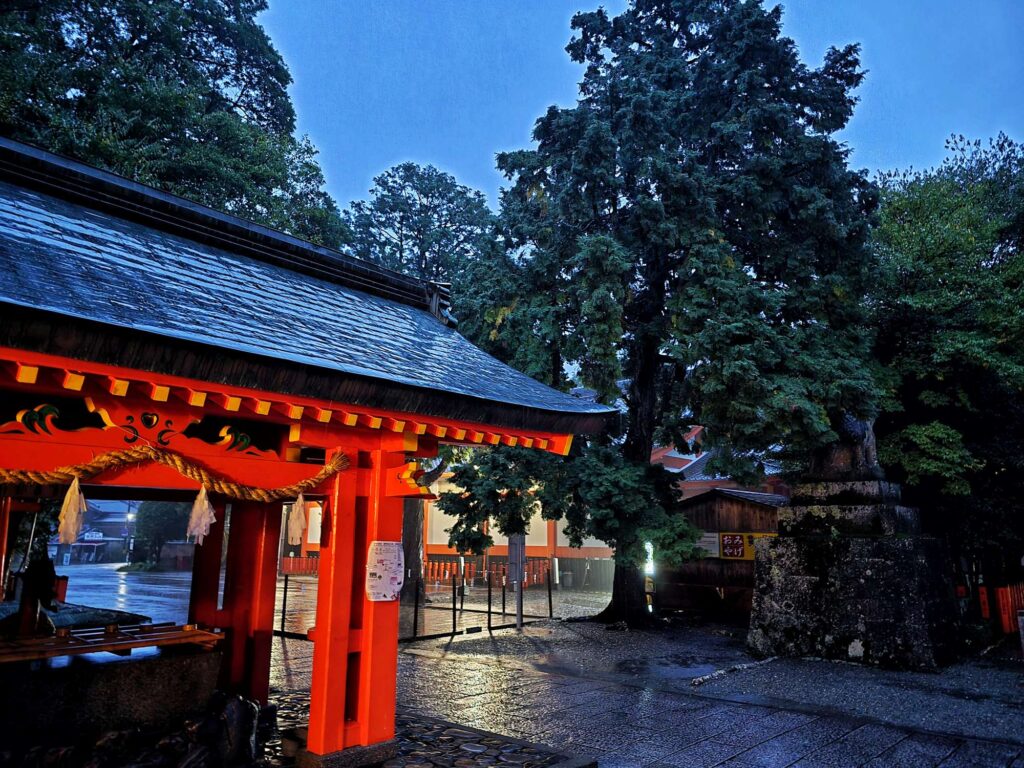
Taken on a rainy day at Hayatam Taisha; it rained the whole day that time!The rain certainly adds a layer of spirituality to the shrine itself.
🧘 Take Your Time at Each Shrine – Each of the Kumano Sanzan shrines features a different atmosphere and unique attractions. Instead of rushing through, take a moment to slow down and soak it all in.
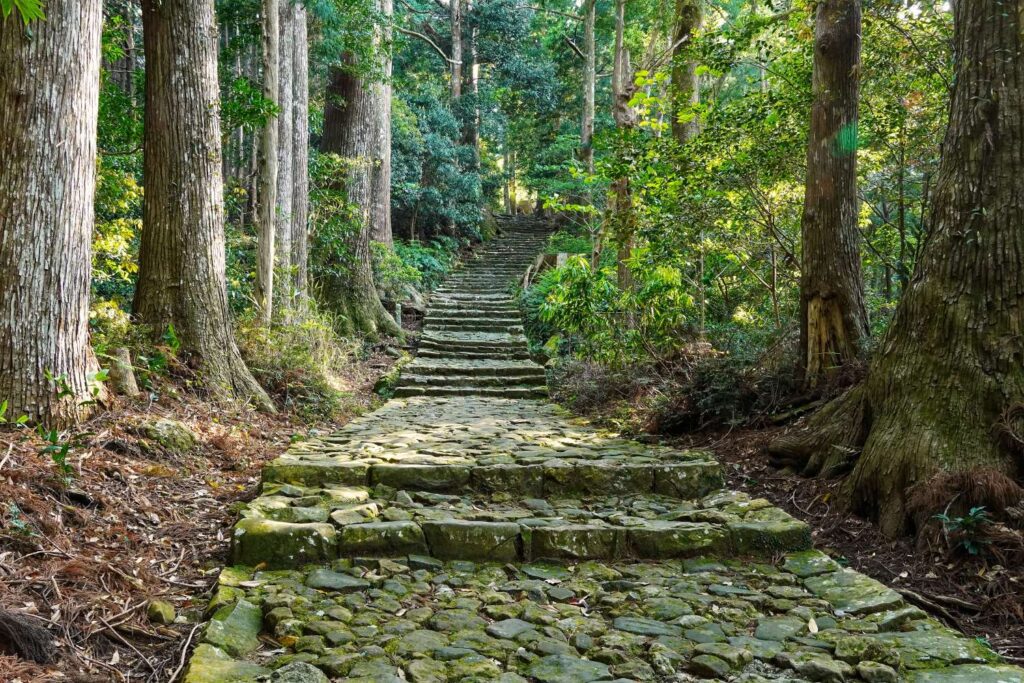
🌿 Combine with a Short Kumano Kodo Walk – Even if you are not a hiker, I recommend walking a small section of the Kumano Kodo pilgrimage trail, the easiest to access being the Daimonzaka Slope. Even a short walk adds a deeper appreciation of not just the region’s spiritual history but also the beauty of mother nature in Japan.
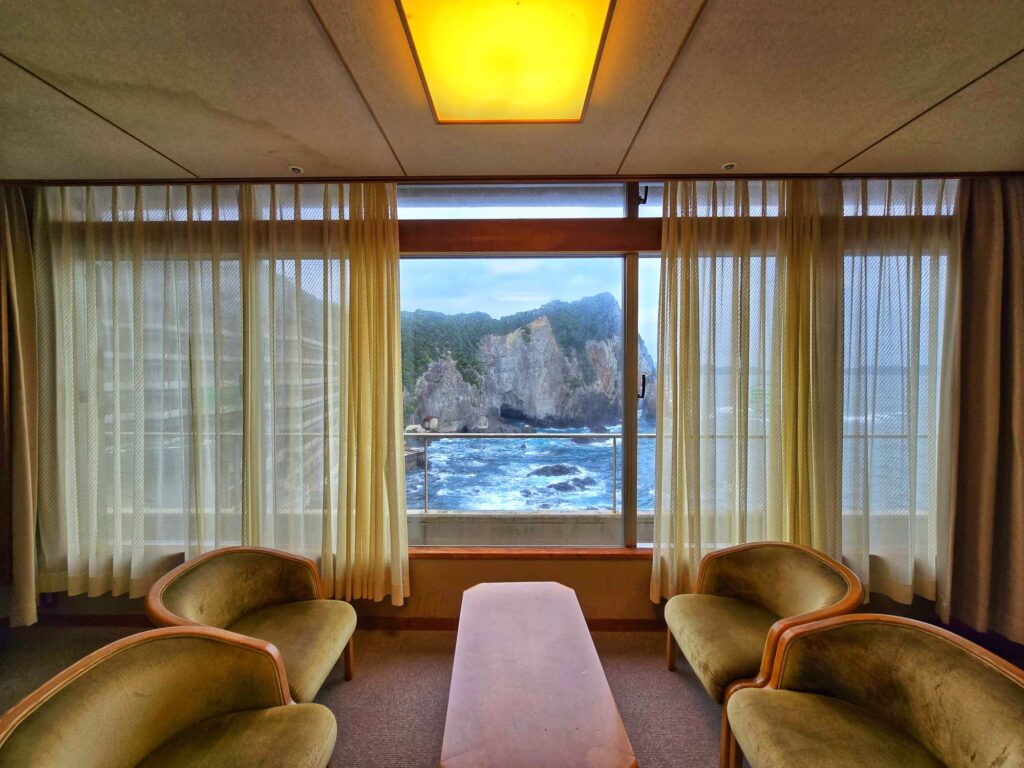
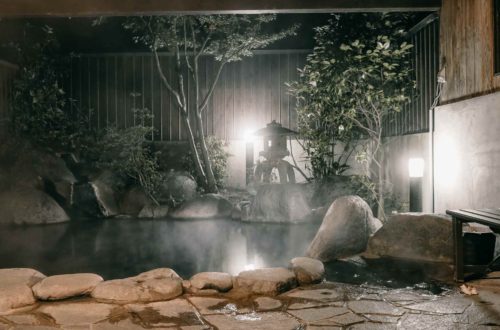
♨️ Stop by One of the Nearby Onsen Spots – Believe it or not, there are many onsen resorts that are located nearby the Kumano Sanzan shrines. And what better way to pamper your legs after a day of travelling by soaking them in a hot spring. Some of these onsen spots to look out include the World Heritage Tsubo-yu (つぼ湯), Kawayu Onsen (川湯温泉) with its outdoor bath along the river and my personal favourite, Hotel Urashima (浦島ホテル) that features hot springs within caves.
We stayed at Hotel Urashima when exploring the Kumano Sanzan Shrines. Click on the picture for our full guide on this unique cave onsen hotel.
Are The Kumano Sanzan Shrines worth visiting?
Definitely! The Kumano Sanzan shrines of Wakayama are absolutely worth visiting if you’re looking to experience a quieter, more spiritual side of Japan beyond the typical tourist destinations.
Compared to places like Kyoto or Tokyo, Kumano Sanzan offers something completely different; ancient shrines surrounded by mountains, waterfalls, and pilgrimage trails that feel deeply connected to nature. For my wife and I, it wasn’t just about visiting three shrines, but about the journey itself, driving through Wakayama prefecture, dressing up in a Heian period costume to explore Nachi Taisha, and experiencing a side of Japan that many travelers miss.
If you enjoy scenic road trips, cultural depth, and fewer crowds, the Kumano Sanzan shrines are easily some of the most rewarding places to include in your itinerary.
FAQs About Kumano Sanzan
What is Kumano Sanzan?
Kumano Sanzan refers to three sacred Shinto shrines; Kumano Hongu Taisha (熊野本宮大社), Kumano Nachi Taisha (熊野那智大社), and Kumano Hayatama Taisha (熊野速玉大社); located in Wakayama, Japan. These shrines are part of the UNESCO-listed Kumano Kodo pilgrimage routes.
Where are the Kumano Sanzan shrines located?
Kumano Sanzan is located in Wakayama Prefecture on Japan’s Kii Peninsula, south of Osaka and Kyoto. The three shrines are spread across a mountainous and coastal region.
How do you visit the Kumano Sanzan shrines?
The best way to visit Kumano Sanzan Wakayama is by car, as the shrines are spread across a large area. Driving allows you to visit all three in one day if you start your trip early, while public transport typically requires two days.
How long does it take to visit Kumano Sanzan?
It typically takes at least a day or two to visit all three Kumano Sanzan shrines comfortably. Travel time between shrines can be longer than expected.
What is Kumano Sanzan famous for?
Kumano Sanzan is famous for its spiritual significance, scenic landscapes, and connection to the Kumano Kodo (熊野古道) pilgrimage routes, a UNESCO World Heritage site.